So as it turned out, St Albans was a really great idea for K and I to visit. I was excited about the history of the Cathedral there, but I was even more excited to learn about the Roman history of the place, too. Long before there was a St Albans, there was the settlement of Uerulamos, which is Brittonic for 'Broad-Hand' in this place.
To give you a bit of the context (I like history): According to the Roman record, by CE 50, Verulamium was a municipium, meaning unlike actual Roman Colonies, citizens of Verulamium weren't granted full citizenship under Roman law. In CE 43, under Claudius, Romans maintained a treaty with the Iceni people -- the ancient Brittons of East Anglia. When their ruler Prasutagus died in c. CE 60, the Romans (now under Nero) attempted to confiscate their land, and annex the realm for Nero. Under their queen, Boudicca, the Iceni revolted, sacked and burned the Roman British Capital in Colchester, London, and the settlement of Verulamium (now St Albans) around CE 61. After this, the city did thrive under the Romans for a couple of hundred years (at least) following the destruction of Boudicca's rebellion, and the citizens of Verulamium eventually received full "Latin Rights" from the Romans. (Sources: Wikipedia, Encyclopedia Brittanica, BBC, British Museum).

Today, there isn't much of Verulamium left, save for bits of wall, a hypocaust, and some of a Roman Theatre. Inside the museum, there are quite a few artifacts, and reproductions of what Roman life might have been like during the time. Above, there is one of the beautiful hypocaust mosaics.
This is a recovered bronze figure of the Roman Goddess Venus:

This Sea God Mosaic is from sometime between c. CE 150 and CE 300.

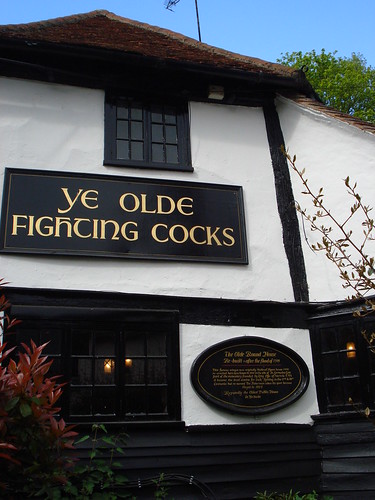
So after all of the historic sight-seeing in Verulamium, K and I got hungry. Within walking distance is a small public house called, Ye Old Fighting Cocks. It is considered by the Guinness Book to be the oldest pub in England, though there is some competition from other pubs. Originally, the pub was known as the 'Round House,' likely because of the round-ish, octagonal structure that makes up the main section. As the sport of cock fighting gained a foothold, the pub was re-branded as Ye Old Fighting Cocks, sometime in the 19th century. Today, this country-inn style pub is affectionately known to locals as "The Fighters."
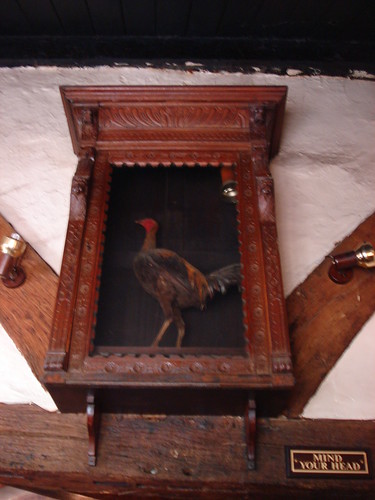
Though I find cock-fighting to be brutal, unnecessary violence of similar ilk to dog fighting, I still thought it was neat to see one of the old taxidermed roosters on display. I'm certainly glad that it is not a place for cock fighting now.
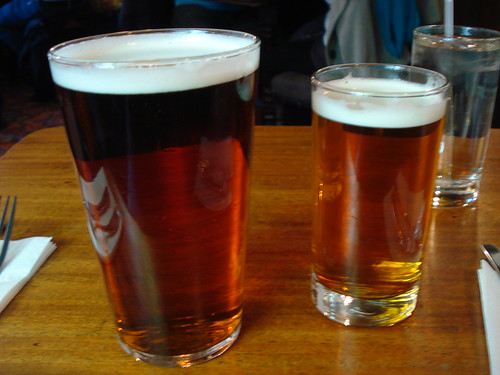
While in the UK, I learned about the Campaign for Real Ale (CAMRA) , a movement to increase the appreciation for traditional beers, ciders, and perries as a part of national heritage. The Fighters just so happens to be home to CAMRA, and so I was able to try a couple of different kinds of 'Real' ale. I don't recall what kinds these were, but I do remember that I like them!
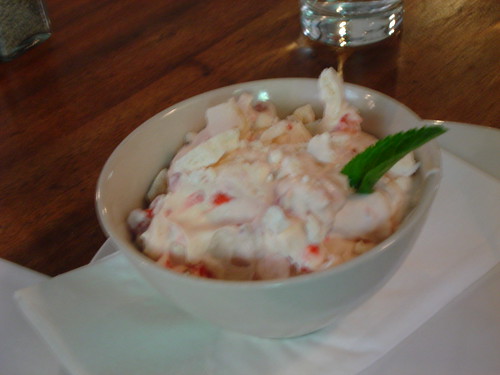
The part of The Fighters that stood out to me the most was the menu. Sure, there was all your usual fish and chips, but there were also a couple of vegetarian options as well! On this day, K and I both opted for some summer veg and squash(?) baked in a beautiful puff pastry shell. SO delicious! Then, the real show stopper was the dessert that we chose - Eton Mess. Even this dessert has a history! It is traditionally served at the annual Eton Collage v. Winchester College cricket match, and strawberries are customary, though just about any summer fruit could be used in it. This one was made from cream, berries, and bits of sweet meringue. No one is really sure where the 'mess' part comes from, though some think it's because of the messy appearance of the dish, and others think it comes from mixing ingredients together. Either way, I assure you, K and I made a mess of it. It was absolutely delicious, and perfect for such a lovely summer day in East Anglia!


